
Interactive content dominates the world. In 2022 alone, video accounted for a staggering 82% of all internet traffic. Add to that the millions of podcasts and billions of gamers worldwide, and it’s clear that multimedia content is king.
But to truly connect with this vast global audience, your content must speak their language—literally and culturally. This is where multimedia localization steps in.
This guide will help you ensure that your multimedia content resonates effectively across different languages and cultures.
Multimedia translation vs. multimedia localization
While often used interchangeably, “multimedia translation” and “multimedia localization” are different processes. Understanding these differences is key for anyone creating and distributing content globally.
What is multimedia translation?
Multimedia translation is the process of changing the text in games, videos, or other media from one language to another. The main goal is linguistic accuracy, ensuring the original meaning is effectively conveyed in the new language.
For example, Jesus (1979) is one of the most translated movies ever, having been translated into an astounding 2,100 languages. The script’s translation into these many languages qualifies as multimedia translation.
But, including these scripts in the movie as subtitles fall beyond the scope of pure translation work. As such, translation is often (but not always) a part of the localization process.
What is multimedia localization?
Multimedia localization is the process of adapting a video, game, or other media so it feels natural to a specific audience. It’s not just about translating text—it is about making the entire experience feel local. This can involve:
- Translating scripts (and translation as a whole).
- Transcreating content to better match the local culture.
- Adjusting images, layouts, and design.
- Ensuring compatibility with local technology.
- And much more.
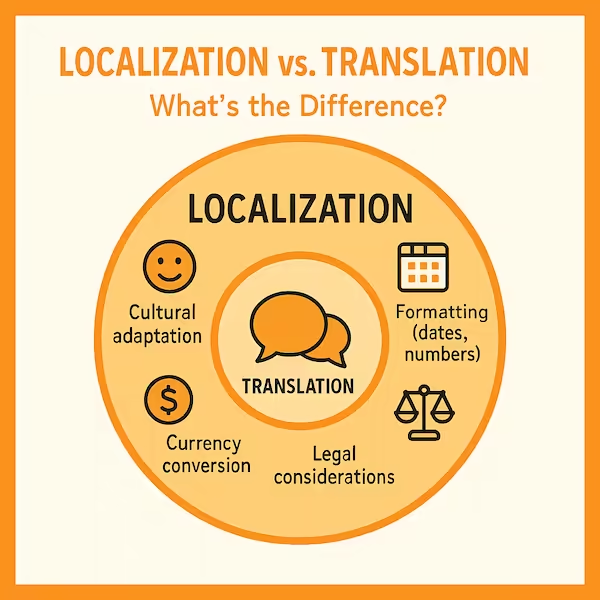
For example, localizing a video game for Japan might include translating dialogues and on-screen text, adapting the user interface (UI) to fit Japanese screen layouts, ensuring it works with Japanese gaming consoles, and even modifying cultural references to better suit Japanese players.
The 7 types of multimedia localization services
The multimedia localization process involves adapting content through several key services. The primary types include:
- Subtitling and captioning
- Transcription
- Voice-over and dubbing
- On-screen text localization
- Image localization
- Video editing and adaptation
- Software localization
Let’s explore what each of these entails.
Subtitling and captioning
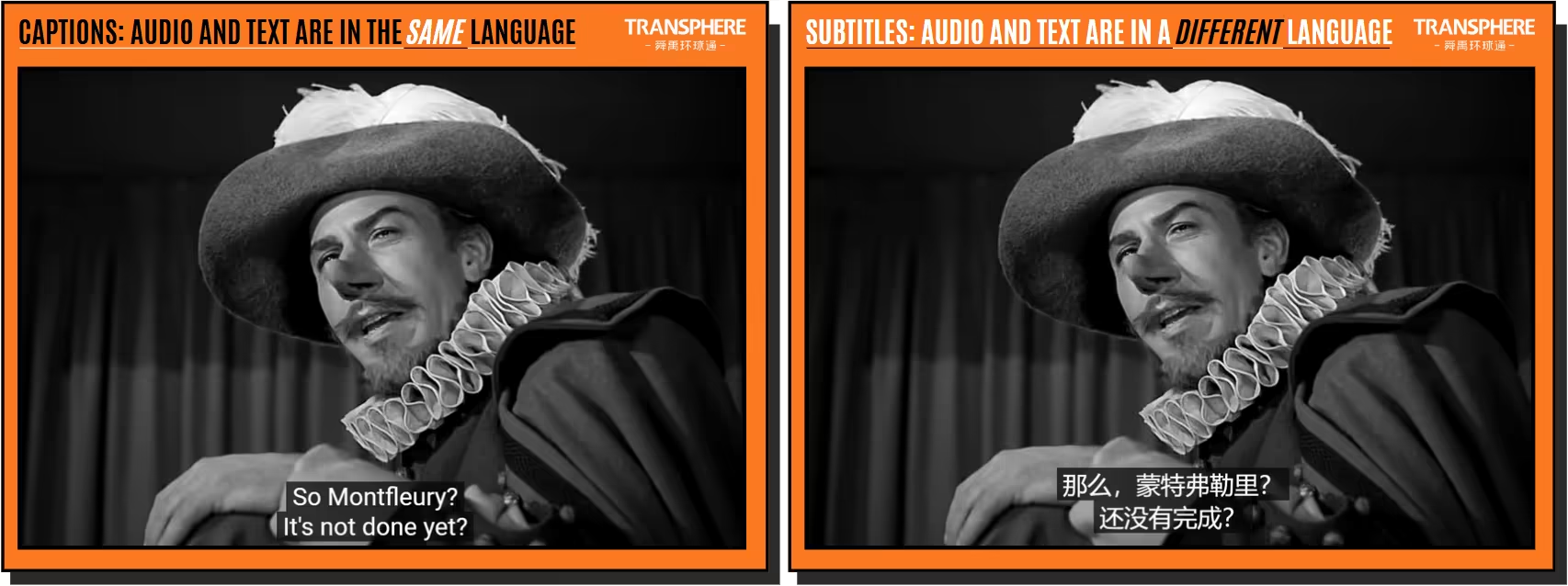
This means turning spoken audio into text in another language (subtitles) or the same language (captions). It makes your content more understandable, allowing more people to enjoy it, including the hearing impaired or those who prefer to watch sound-free.
Transcription
It’s the first necessary step for subtitling or translation, and it involves converting spoken audio into written text in the same language.
Voice-over and dubbing
While they are often used interchangeably, voice-overs and dubbing are different. Voice-overs involve recording a new voice track in the target language that plays over the original audio. On the other hand, dubbing replaces the original voice track entirely with translated audio.
These services are more costly than subtitling, yet they are the gold standard for creating an immersive experience.
On-screen text localization
Many videos and interactive content contain text embedded within the visuals. For example, titles, lower thirds, and call-to-action buttons. On-screen text localization extracts, translates, and inserts this text back into the visuals.
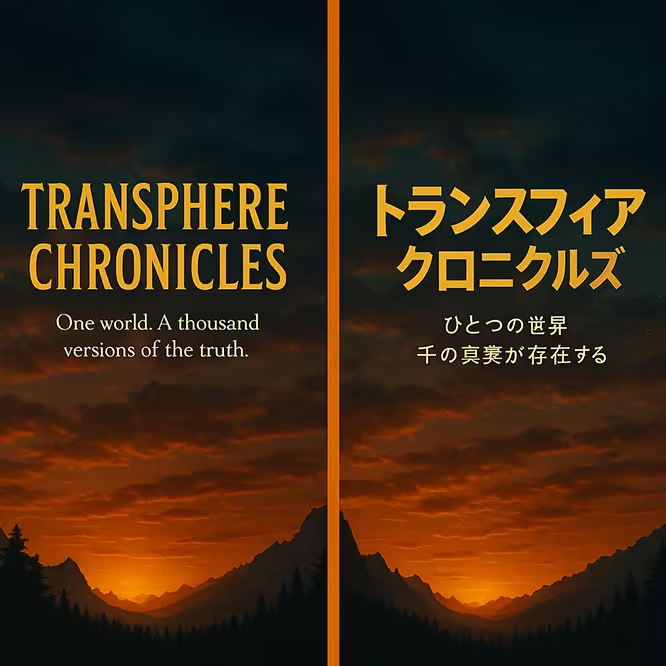
Image localization
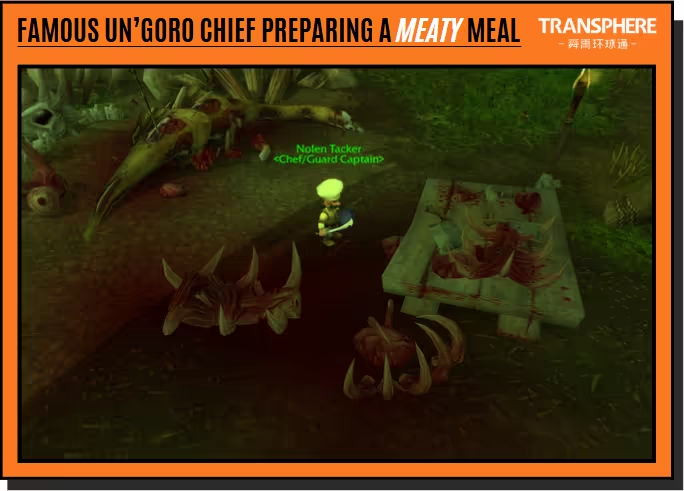
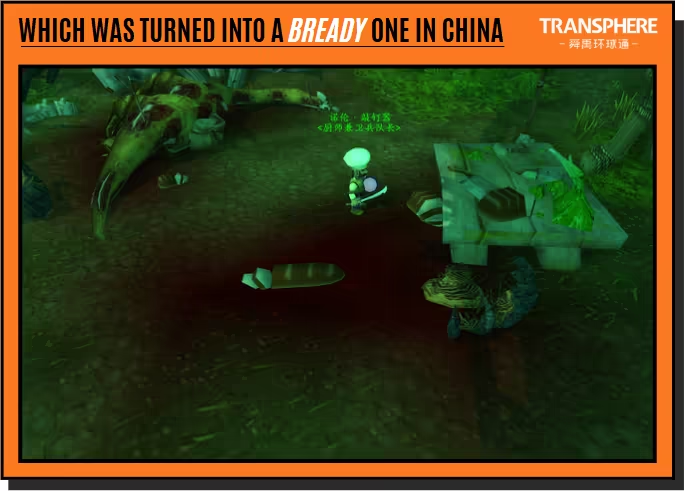
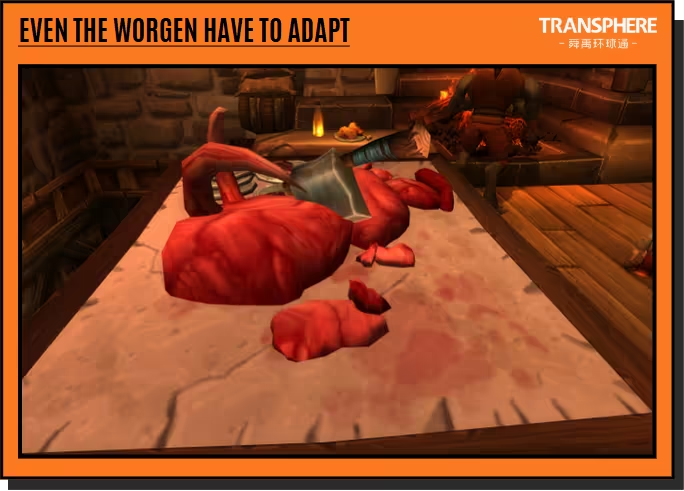
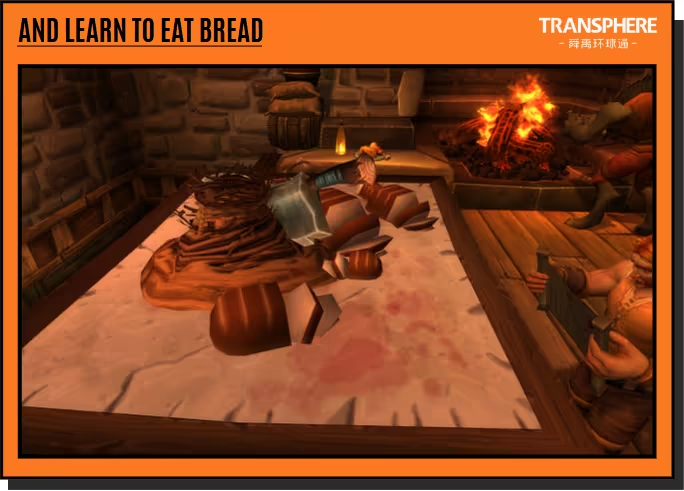
At times, some images are not appropriate for some audiences. They must be modified accordingly, whether due to a lack of cultural resonance or regulatory concerns.
For example, when Activision-Blizzard wanted to sell its game “World of Warcraft” in China, it had to remove all bones and innards. Sometimes, this led to some entertaining replacements.
Video editing and adaptation
Cultural differences can sometimes affect the visual elements of a video. This involves editing the video to remove or add more suitable elements for the target audience.
Software localization
Video games are a prime example, but any software or website likely needs more services. For instance, UIs and menus likely need to be adjusted to fit new languages. After all, Chinese and English scripts do not take the same space or need the same font.
The multimedia localization process: A step-by-step guide
Successfully localizing multimedia content requires a structured approach, typically involving these six core stages:
- Project initiation and planning
- Content analysis and preparation
- Translating and adapting the content
- Audio and video production
- Quality assurance (QA) and testing
- Delivery and implementation
Let’s break down what happens in each phase.
1. Project initiation and planning
This phase is about figuring out exactly what the project needs to cover. You’ll decide who the final product is for (the target audience) and which languages you need. You also set the deadlines and budget and put together the localization team. Good communication and clear goals are essential right from the beginning.
2. Content analysis and preparation
Before the localization begins, the multimedia content needs to be thoroughly analyzed. This means finding everything that needs to be translated—text, audio, and on-screen text. You also figure out any technical needs (like specific file formats) and organize everything for the team to work on.
For example, you might need to pull the text out of a video file or prepare audio tracks so they can be transcribed.
3. Translating and adapting the content
This is where the actual translation happens. Professional translators, often experts in the subject matter (gaming, movies, etc.), translate all the text. Crucially, they also adapt the content so it feels natural and makes sense in the target language and culture.
This goes beyond simple word-for-word translation and considers nuances, idioms, and cultural references. For audio content, scripts are translated and adapted for voice-over or dubbing.
4. Audio and video production
With the translations ready, it’s time to create the final audio and video elements in the new language. This step can include:
- Recording new voice-overs using native speakers.
- Replacing the original voices with translated ones (dubbing).
- Adding subtitles or captions for viewers to read.
- Updating any text or graphics shown on the screen to the target language.
5. Quality assurance (QA) and testing
The QA and testing stage is essential. It ensures the localization’s overall quality, accuracy, and functionality are perfect (or as close to it as possible). The process typically covers a few key areas:
- Linguistic review: Native speakers dive deep here, checking for correctness, appropriate tone, and consistency. They are invaluable for spotting subtle language errors or awkward phrasing that non-natives (or even translation software) would completely miss.
- Cultural check: Does anything in the localized content feel awkward, inappropriate, or just plain wrong for the target culture? This review ensures your content resonates positively and avoids unintentional offense or confusion.
- Technical testing: This stage involves checking if all localized text displays correctly (no cut-offs or weird characters), if subtitles or captions sync perfectly with the audio/video, and if localized software or games function smoothly on relevant devices and platforms.
6. Delivery and implementation
The localization team delivers its output to the end client, who then integrates it into the final product. At this point, a feedback stage and some extra reviews can be added. Otherwise, the project can be concluded.
Remember that while the multimedia localization process is complex, it is flexible. As such, the order may vary; some steps can be added, while others can be removed. It all depends on the project’s requirements.
Actionable multimedia localization tips
Implementing these multimedia localization best practices can help you avoid costly problems and ensure better results. Key tips include:
- Deeply understand your target audience.
- Work with experienced localization professionals or partners.
- Plan for localization early in the content creation process.
- Leverage local culture effectively and sensitively.
- Ensure technical compatibility across platforms.
- Maintain brand consistency globally.
- Provide translators with ample context and reference materials.
- Use appropriate localization tools and technology.
Here’s a closer look at each of these practices.
Understand your target audience
Understanding your audience’s preferences allows for more effective messaging, which is the very essence of localization. Consider the animated film Inside Out. While the story was universal, Director Peter Docter recognized that cultural nuances required adaptation.
In a pivotal scene, the American version showed Riley disliking broccoli. For Japanese audiences, this was changed to green bell peppers, a vegetable more commonly disliked by children in Japan. Docter noted that some content simply wouldn’t translate culturally.
It illustrates how understanding an audience—both linguistically and visually—leads to more relevant content. It won’t surprise you to learn that Inside Out generated 58% of its revenue outside the US.
Work with experienced localization professionals
Relying on freelancers can be enough for small projects. But, for larger projects, partnering with experienced multimedia localization providers is necessary.
They have mature processes designed to deliver the best multimedia localization quality possible. Recreating that with freelancers is very difficult.
Plan for localization early
Trying to localize content as an afterthought can lead to increased costs and delays. Consider localization requirements from the very beginning of your content creation workflow.
Leverage the local culture
Actively leveraging local culture during the localization process itself is crucial for avoiding pitfalls and creating genuine connections. Getting this aspect wrong can have significant consequences beyond simple translation errors.
Consider the 2012 movie remake Red Dawn. The villains were initially depicted as Chinese, but significant and costly post-production changes were required to switch them to North Koreans, primarily to secure access to the lucrative Chinese market (ultimately failing to do so). This case shows how important it is to consider your targets’ cultural and political sensitivities ahead of time.
On the other hand, Activision Blizzard demonstrated how culture can be effectively leveraged in their game Overwatch. They introduced special in-game items (“sprays”) themed around Ramadan. While a relatively minor addition in the grand scheme of the game, this gesture resonated strongly with players who celebrate the holiday, fostering goodwill and loyalty—essential components for the success of a community-driven game like Overwatch.
So, how do you effectively navigate these complex cultural nuances, especially if you lack deep internal expertise? A key strategy is collaborating with cultural consultants specializing in your target markets.
These experts can:
- Review your multimedia content for potential cultural, social, or political sensitivities your team might easily miss.
- Advise on specific visual, textual, or thematic adaptations to ensure your message resonates appropriately and feels authentic to the local audience.
- Help you avoid costly mistakes, prevent negative PR, and maximize your localized content’s positive reception.
You can often engage these consultants directly or work through your chosen multimedia localization agency, who may already have established relationships with experienced cultural experts for various regions.
Ensure technical compatibility
Your localized multimedia content needs to work flawlessly on the platforms and devices used by your target audience. This might involve adapting file formats, video resolutions, or software compatibility.
Maintain brand consistency
While adapting your content, maintain your brand voice and messaging across all languages and cultures. Develop clear brand guidelines for localization.
Provide ample context and reference materials for translators
Translators can’t translate in a vacuum. The more context they have on your project, the better their translation quality.
That means providing a comprehensive localization kit (lockit), which typically includes visual examples, character backstories, style guides, glossaries, etc. It ensures that translators accurately convey each character’s style, tone, and personality.
Use the right multimedia localization tools
Leveraging translation management systems (TMS), subtitling software, and other specialized tools can streamline the localization process and improve efficiency.
By following these multimedia localization tips, you can increase the chances of your content being well-received and achieving its intended goals in global markets.
How to choose the right multimedia localization partner
Selecting the best multimedia localization provider is a critical decision that can significantly impact your global content strategy. Evaluate potential vendors based on key criteria, including:
- Proven expertise in multimedia localization.
- Sufficient language coverage and scalability.
- Robust and transparent quality assurance processes.
- Competitive and clear pricing structure.
- Effective communication and project management capabilities.
Let’s consider what to look for in each area.
Are they multimedia localization experts?
Multimedia content localization isn’t the same as medical or legal translation. As such, partnering with companies that work in this field is important. They don’t have to be specialists (although it helps), but they should have easily verifiable experience in your field.
Ask for case studies or examples of their previous work; most reputable vendors are happy to share them.
How many languages do they cover, and can they scale them quickly?
It may seem obvious, but the multimedia localization agency you pick should have native linguists for the language pairs you need. Ideally, they should have enough in-house translators to manage critical projects and reliable freelancers to quickly scale up their output.
Aside from talking to the vendors, you can (when possible) ask to visit their offices before signing any major contract. That can give you a real idea of their scale.
You can also consider your future needs here. You don’t have to work with a single vendor for all languages, but having a major vendor for the bulk of them enables you to access preferential pricing compared to relying on many different vendors.
Do they have strict quality assurance processes?
A good partner must have robust quality assurance processes. They should include linguistic reviews by native speakers, technical testing, and potentially cultural consultation.
Is their pricing competitive?
Understand their pricing structure and ensure it aligns with your budget. A transparent pricing model with no hidden fees is crucial. Take the time to talk to several potential vendors and compare their pricing and potential output. But don’t focus on the lowest price alone; consider the overall value and quality offered.
Can they communicate quickly and effectively?
Effective communication and a well-organized project management process are essential. As such, you need to evaluate whether they have offices in your time zone and how responsive they can be. This is particularly relevant for time-sensitive projects.
Key takeaways
- Multimedia content is king: Video, audio, and interactive content dominate internet traffic, making it essential for global communication.
- Localization bridges global gaps: To connect with diverse audiences, multimedia content must be localized, adapting it linguistically and culturally, not just translated.
- Localization > translation: While translation focuses on linguistic accuracy, localization is a broader process of adapting the entire experience (text, audio, visuals, cultural references, technical aspects) to feel native to a specific market.
- Diverse services involved: Multimedia localization encompasses services like subtitling, captioning, voice-over, dubbing, on-screen text/graphic adaptation, video editing, and software adjustments.
- A structured process is key: Effective localization follows steps including planning, content analysis, translation/adaptation, audio/video production, and rigorous quality assurance (QA).
- Cultural nuance matters: Understanding and adapting to the target audience’s culture is crucial for resonance and success.
- Plan early & use experts: Integrating localization early in content creation and working with experienced professionals or partners prevents costly issues and ensures quality.
- Technical & brand consistency: Ensure technical compatibility across platforms and maintain brand voice consistency while adapting content.
- Partner selection is critical: Choose localization partners based on their multimedia expertise, language coverage, scalability, robust QA processes, transparent pricing, and effective communication.