
Tourism translation has always played an important role in the industry. After all, by its very nature, tourism is where the world meets itself. During the recent pandemic, it took on an outsized role, helping to communicate critical health and safety information.
Thankfully, the pandemic is now over. While the industry has yet to fully recover, we are getting close. In fact, according to experts, 2024 is set to beat pre-pandemic numbers in both tourists and revenue. That’s an extraordinary recovery!
Just four years ago, the world was largely frozen, with little to no travelers going anywhere. In fact, from 2020 to 2021, we saw fewer tourists than in 2019 alone. Here is a quick recap:
- In 2020, the COVID-19 year, there were 381 million tourists worldwide.
- In 2021, there were 457 million tourists worldwide.
- In 2022, it rose sharply to 960 million worldwide tourists.
- In 2023, there were 1.26 billion worldwide tourists.
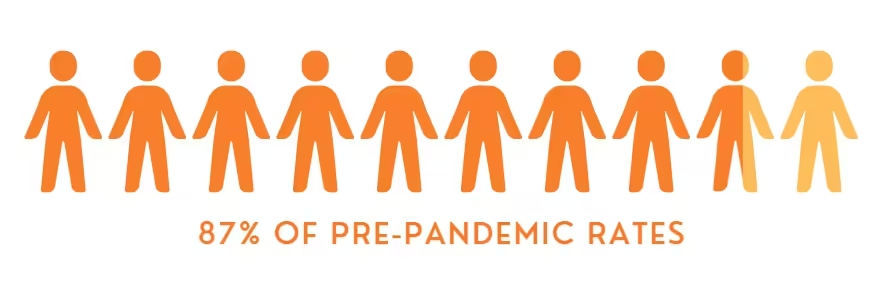
This incredible recovery can be explained by many factors, but the main one is regulatory in nature. Governments finally dropped many pandemic-related travel restrictions. However, it’s not the only reason:
- Airlines have slowly but consistently lowered flight prices, which has stimulated demand.
- Robust promotional activities from airlines, travel agencies, and hotels.
- Government support for the industry.
- Unleashed pent-up demand.
- To a lesser extent, better implementation of tourism translation and localization.
While we are still in the middle of summer (for those of us in the Northern Hemisphere), the 2024 numbers look very promising. In fact, forecasts expect the industry to enjoy $8.6 trillion in traveler spending, accounting for 9% of global GDP!
With that in mind, if you’d like to capitalize on this surge in demand, it is imperative to dot your i’s and cross your t’s. In an industry where language is key, tourism translation is the fundamental bridge you will need.
What is the meaning of tourism translation?
Tourism translation is the process of converting tourism-related materials from one language into another. This includes websites, brochures, menus, audio guides, and any other content that helps travelers explore and enjoy a destination.
The ultimate aim of tourism translation goes beyond making information accessible. It’s about crafting a message that speaks directly to the target audience, capturing the spirit and allure of your destination as if it were originally written in the traveler’s language.
For example, consider the translation of a brochure for a historic French chateau. A basic translation might simply convert the factual descriptions of rooms and gardens. But, a truly effective translation would tap into the romantic and luxurious atmosphere of the chateau. The language would be carefully chosen to evoke a sense of history, grandeur, and the unique experience of staying in such a place.
Why is translation important in tourism?
Tourism translation is all about accessibility. It opens doors to a much wider audience and leads to increased interest and, ultimately, more revenue for your business.
Research across industries consistently shows that consumers are more likely to engage with a product or service when the information is presented in their native language.
But, the benefits of tourism translation don’t stop there.
1. Attract more tourists
If you don’t translate your content, you’re likely missing out on a large pool of potential guests. In fact, according to CSA Research, a staggering 76% of online shoppers prefer to buy products and services with information in their own language.
This is even more important in the tourism industry where the price of a given good or service is relatively high (a flight vs. a cup of coffee).
Worse yet, 40% of those surveyed would never even consider booking if a website isn’t in their native language. That’s a massive segment of potential guests you could be losing!
By strategically translating your offerings, you open the doors to a global audience, significantly boosting your chances of attracting new visitors from all over the world.
2. More long-term revenue
Repeat visitors are the lifeblood of the tourism industry. Studies show they’re 60-70% more likely to book than first-time guests. That’s why creating an exceptional, personalized experience is vital for long-term success.
Tourism translations are powerful here. They help you cater directly to your visitors’ needs, increasing satisfaction and encouraging them to return.
Research by CSA indicates that companies investing in translation throughout their business see significant benefits. They’re 2.67 times more likely to increase revenue and 2.6 times more likely to boost profits.
Furthermore, those translating their offerings to gain a competitive advantage are 2.04 times more likely to see increased profits. Considering the relatively low cost of localization, it’s an investment that truly pays off.
3. Better brand consistency
Consistency across branches is the key ingredient to create a truly memorable experience. It helps your guests and customers instantly recognize your services and feel right at home. This consistency principle is the cornerstone of great marketing, and it starts with the language.
By leveraging professional tourism translation services, you can ensure that your message, tone, and the unique personality of your brand are accurately conveyed in every language.
While it may not be a cheap endeavor, it pays over the long run. In fact, a survey of over 4000 consumers revealed that 46% would pay higher prices for a trustworthy brand. That trust is built on the back of consistent high-quality services year after year.
4. Better Search Engine Optimization (SEO)
In today’s world, attracting new tourists often starts with search engines like Google. That’s where potential guests begin gathering information about their destination, flights, hotels, and itineraries.
That’s where SEO comes into play. By optimizing your digital offerings, you can attract more potential visitors. While the relationship between SEO and translation may not seem obvious, it is there.
Google has been actively trying to personalize its Search experience for years. As such, it prioritizes language. In simple terms, a user searching for a hotel in Spanish will get Spanish results.

As you can see, on the left are the original English websites. On the right are their Spanish versions. Had these sites not taken the time to translate their content, a competitor would show up in the Spanish search results instead. That’s one of the key values of travel and tourism translation for SEO.
That’s even more important for “local search” because of its high conversion potential. Did you know that 76% of people who search locally on their smartphones visit a related business within just 24 hours? That percentage grows to 88% after a week—a huge opportunity considering how trip planning works.
With all of this in mind, tourism translation services are key to unlocking the value of international search engines for your business.
5. Better customer support
By taking the time to build a multilingual portfolio of services, you can provide world-class customer support. After all, in the hospitality industry, you will come across a variety of multilingual guests.
To cater to their needs, it is important to provide access to interpreters and translated materials. While you could manage these with freelancers and individual agents, there are a few things to keep in mind:
- Demand: If you have a small business with low seasonal demand, a qualified translator or two should be enough. But, if you experience large, unexpected changes in guest numbers, a tourism translation agency is a better fit. While agencies cost more, they can manage unexpected changes and varying degrees of customer expectations.
- Quality: Unlike freelancers, an agency has strict quality standards built through decades of trial and error, as well as adherence to international standards. If you’re hosting highly professional and distinguished conferences or guests, it is vital to rely on reputable organizations.
Transphere: How we can help
With 27 years of experience, we at Transphere understand the unique needs of the hospitality industry. Our tailored solutions help you craft a welcoming, multilingual experience that delights guests from around the world.
What do you get with Transphere as your partner?
- A massive reach: Communicate effortlessly with guests in over 80 languages, unlocking the potential of 159 global markets.
- Streamline your operations: From website translation to menus and brochures, we provide a full range of services to ensure a seamless experience for your guests, no matter their language.
- Peace of mind: Our commitment to ISO 27001 standards means your data is secure. We employ rigorous protocols to protect your information, every step of the way.