
Historically, Chinese anime struggled to gain the same level of international popularity as its Japanese counterparts. However, recent years have seen a significant shift, with Chinese anime experiencing a surge in global recognition. This newfound appreciation is largely due to improved quality and effective anime translation efforts, which have played crucial roles in presenting these cultural products to a wider audience.
The unique narratives and distinctive visual styles of Chinese anime, once overshadowed, are now captivating audiences around the world, thanks to high-quality anime translation that bridges language and cultural gaps. These localization efforts ensure that the intricate storylines, character depth, and cultural nuances are accurately conveyed, allowing the global audience to fully appreciate the rich artistic expression and cultural values embedded in Chinese anime.
As a result, Chinese anime is not only meeting the global demand for diverse entertainment content but is also carving out a unique niche for itself in the international entertainment landscape, challenging the dominance of Japanese anime and manga.

Ne Zha—A successful case of anime translation
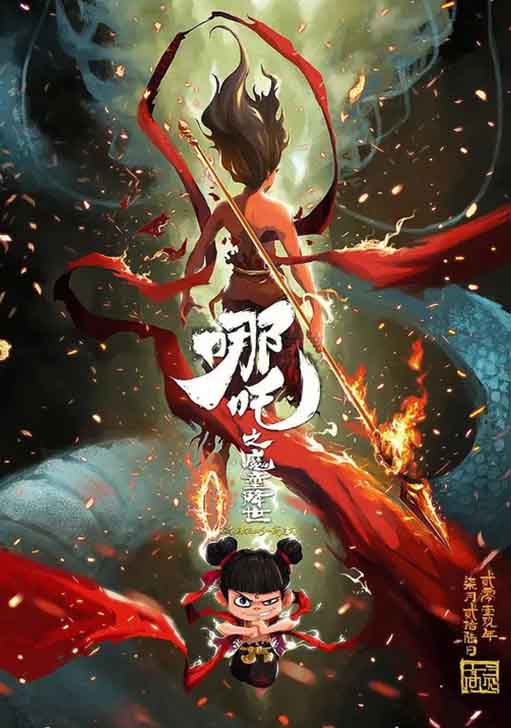
Ne Zha is a Chinese animated film that has not only achieved tremendous domestic success but also gained international recognition. This breakthrough work, based on a centuries-old mythical character from Chinese mythology, tells the story of a mischievous boy caught in a struggle between good and evil, destined to become a hero. With a modern spin on a traditional tale, Ne Zha resonated deeply with audiences, leading to its remarkable box office success in China, which grossed over $700 million. It made it the highest-grossing Chinese animated film and the second-highest-grossing domestic film of all time in China.
Internationally, Ne Zha was China’s submission to the Academy Awards in both the Best Animated Feature and International Feature Film categories, showcasing the film’s artistic quality and international appeal. While the financial metrics are impressive, these nominations at prestigious awards highlight the film’s cultural impact and recognition beyond its financial success, underscoring the effectiveness of its localization and the growing global reach of Chinese anime.
How the Anime translation team dealt with Ne Zha
The translation team for Ne Zha employed innovative translation strategies to ensure that the storyline, humor, and cultural nuances were fully understood and appreciated by international audiences.
They not only accurately translated dialogues but also focused on retaining the original style and emotional expression. By skillfully adjusting the translation of humor elements, cultural metaphors, and puns, the story becomes more appealing in the international market.
Example 1: From livers to apples
The film features numerous dialogues and scenes deeply rooted in Chinese culture and metaphor. One notable example is a heartfelt moment where Ne Zha‘s father expresses his deep affection for his son. The original Mandarin dialogue is:
“你是爹妈的心肝宝贝” (nǐ shì diē mā de xīn gān bǎo bèi).
A literal translation of this phrase would be:
“You are the heart and liver treasure of your father and mother.”
In traditional Chinese culture, the “heart and liver” are often used to symbolize precious and deeply beloved things, reflecting the deep love and value parents place on their children. But as you can see, it would be a terrible translation choice since it holds little meaning in English and would feel incredibly clunky. The translation team, deeply aware of this fact, adapted this phrase to a more culturally relatable expression for international audiences. They translated it as:
“You are the apple of our eye.”
This English idiom conveys a similar sentiment of deep affection and cherishing, making it more understandable and emotionally resonant for non-Chinese viewers. The adaptation of this phrase exemplifies the skillful localization efforts of the translation team, who accurately translated the literal meaning and captured the emotional depth and cultural context, ensuring that the film’s essence is conveyed effectively to a global audience.
Example 2: Rebirth
In the following example, we deal with a passage about the rebirth of Ne Zha. In the original, the sentence reads as:
“哪吒脱胎换骨,改头换面。” (Nǎzhā tuōtāi huàngǔ, gǎitóu huànmiàn).
A literal translation of this sentence would be:
“Nezha shed his mortal body and bones, changing his appearance completely.”
This phrase uses traditional Chinese idioms to describe a profound transformation. “脱胎换骨” (tuōtāi huàngǔ) literally means “to shed one’s body and change one’s bones,” while “改头换面” (gǎitóu huànmiàn) translates to “changing one’s appearance.” These idioms are rich in symbolic meaning, indicating a deep, fundamental change. However, for non-Chinese audiences, this literal translation might not convey the phrase’s full depth and cultural nuance. The translation team, therefore, chose a culturally equivalent phrase in English:
“Nezha transformed completely, like a phoenix reborn.”
This translation captures the essence of Ne Zha‘s transformation. The metaphor of a “phoenix reborn” is widely recognized in many cultures as a symbol of profound change and renewal, akin to the metamorphosis Ne Zha undergoes.
Example 3: Flipping tables (╯°□°)╯︵ ┻━┻
In this next example, the Anime translation team had to deal with a subtle pun, which is notoriously difficult to translate. Let’s look at the original dialogue:
“掀桌子的事,就交给我吧.” (Xiān zhuōzi de shì, jiù jiāogěi wǒ ba).
While “掀桌子” (xiān zhuōzi) translates to “flip the table,” it can also metaphorically imply causing a disturbance or making a bold move in Chinese. The phrase “就交给我吧” (jiù jiāogěi wǒ ba) means “just leave it to me.” A direct translation of this sentence would be:
“The matter of flipping the table, just leave it to me.”
While this conveys the basic idea, it misses the nuance of the phrase in Chinese culture, where “flipping the table” is often used to express frustration or a decisive, disruptive action. In this context, the dialogue is meant to showcase that the speaker wants to handle the problem and is willing to fight for his friend.
The translation team picked the following translation:
“Leave the table flipping to me.”
This translation is effective for several reasons. First, it captures the literal action of “flipping the table,” which is visually descriptive and can be understood universally. Second, the phrase “leave the table flipping to me” cleverly retains the double entendre present in the original dialogue.
Among younger English-speaking audiences familiar with the genre, “table flipping” can mean literally overturning a table (indicating a dramatic action) and metaphorically taking charge of a challenging situation. In fact, this expression has become a popular online emoji ((╯°□°)╯︵ ┻━┻) and meme that captivates users worldwide. This choice captures the spirit of Nezha’s character, known for being both a troublemaker and a problem-solver.

Example 4: Master your destiny
In an epic passage where Ne Zha asserts himself in the face of adversity, his original dialogue reads as:
“吾命由我不由天” (Wú mìng yóu wǒ bù yóu tiān).
This sentence consists of a few key elements.
- “吾命” (wú mìng) means “my fate” or “my life.”
- “由我” (yóu wǒ) translates to “by me” or “controlled by me.”
- “不由天” (bù yóu tiān) means “not by Heaven.”
The phrase encapsulates a philosophy of taking control of one’s destiny rather than leaving it in the hands of fate or divine will. A direct translation of this phrase would be:
“My life is controlled by me, not by Heaven.”
This literal translation conveys the basic idea but lacks the poetic and motivational essence that the original phrase embodies. Instead, the Anime translation team made the following translation:
“I make my own destiny, not Heaven.”
By choosing these words, the translation not only preserves the philosophical depth of the original sentence but also makes it more relatable and inspirational for international audiences.
The story, centered around themes of growth, self-discovery, and confronting one’s destiny, resonates with audiences worldwide. By blending unique aspects of Chinese culture with universal values, the narrative carries distinct Chinese characteristics while maintaining a broad, global appeal. This balance of cultural specificity and universal themes is key to the film’s international success and appeal.
Ne Zha’s promotion and distribution
Ne Zha implemented strategic international distribution and promotion measures, leveraging key partnerships and timing to maximize its global reach and appeal. Although not as monumental as its domestic success in China, the film’s overseas performance was still noteworthy. In the United States, Ne Zha managed to secure a satisfactory box office revenue, especially considering its performance on a per-theater basis compared to mainstream American releases. The film opened in over 70 theaters in the U.S., grossing $1.5 million in its first weekend, indicating a strong per-theater revenue despite its limited release.
Admittedly, when viewed in isolation, the $1.5 million opening weekend gross of Ne Zha in the U.S. may seem modest, particularly when juxtaposed with box office giants like Angel Has Fallen, which raked in $15 million during the same timeframe. However, this comparison doesn’t tell the whole story. “Angel Has Fallen” had the advantage of screening in a sprawling network of 3,000 theaters, whereas Ne Zha was showcased in a mere 70. A closer analysis reveals that on a per-theater basis, Ne Zha boasts an impressive average earning of $21,428, overshadowing Angel Has Fallen’s average of $5,000. This paints a picture of a strong audience draw and market efficiency for Ne Zha that belies its seemingly low total gross in the U.S. market.

The film’s distribution strategy included partnering with Well Go USA Entertainment, a distributor with experience bringing Chinese films to the North American market. This partnership allowed Ne Zha to be released in IMAX 3D theaters across North America just over a month after its debut in China, followed by a nationwide expansion. This swift international rollout is a departure from the traditional delay in the availability of foreign animated features to American audiences.
The film’s promotion emphasized its universal themes of destiny and choice, resonating with audiences globally and showcasing China’s ambition to expand its cultural influence by developing its own intellectual properties.
Furthermore, Ne Zha’s entry into the Oscar race as China’s submission for the Best International Feature Film highlighted the Chinese animation industry’s growing ambition and capability to compete on the global stage.
What does the future hold for Chinese anime?
Clearly, despite the tremendous work of the Ne Zha team, the Chinese anime industry still has a lot of work to do. But to succeed, the industry must develop a deeper understanding and commitment to the localization process.
Crafting narratives that maintain their original charm while also connecting with diverse audiences worldwide is crucial. Of course, that’s challenging, but it remains necessary. The industry must move forward, leveraging cutting-edge animation techniques and nascent generative AI technology and fully understanding the utility of localization in captivating their audience’s minds and, thus, their wallets.
These developments are the necessary ingredients for Chinese anime to mirror the international success of American blockbusters. The journey might be challenging, but the potential is immense. With a commitment to innovation and a deep appreciation of global audience preferences, the day isn’t far when Chinese animations will not just compete but possibly even lead in the international entertainment arena.