-
Labels
-
Categories
-
Attributions
| Applications | Computer Vision | Natural Language Processing | Speech Recognition | Data Mining & Recommender Systems |
|---|---|---|---|---|
| Scenarios | Image recognition, object detection, face recognition, image segmentation, etc. | Text classification, sentiment Analysis, Named entity recognition (NER), Machine translation, etc. | Speech-to-text (speech recognition), speech command recognition, voice interaction, etc. | User behavior analysis, personalized recommendations, targeted advertising, etc. |
| Data | Image dataset, including samples of different categories of images. | Text dataset, including annotated information on sentiment, entities, and relationships. | Speech recording dataset, including speech signals and corresponding text transcriptions. | User behavior dataset, including information on clicks, purchases, ratings, and more. |

The 7 requirements data labeling companies have mastered

The 5 technique categories used by data labeling companies
Data labeling companies deploy many (many!) techniques and tools, which we can categorize broadly by data type and tool reliance. The 5 categories are text, image, video, audio, and automated labeling techniques.
1. Text labeling techniques
The most common type of data is text data. For this type, the most common techniques are:
- Named Entity Recognition (NER).
- Part-of-speech tagging.
- Syntax analysis.
- Sentiment analysis.
We deploy NER to annotate entities (such as names of people, places, organizations, etc.) in the text. On the other hand, when we want to label grammatical categories of words, we rely on parts of speech tagging. For grammatical relationships between words in a sentence, we use syntax analysis. Finally, to annotate the sentiment polarity of the text, we rely on sentiment analysis.
-
Entity linking.
-
Relation extraction
-
Employment relations:
-
Sentence: “Angela Merkel served as the Chancellor of Germany.”
-
Extracted Relation: (Angela Merkel, served as, Chancellor of Germany)
-
-
Family relations:
-
Sentence: “Elon Musk’s brother, Kimbal Musk, is also an entrepreneur.”
-
Extracted Relation: (Elon Musk, brother of, Kimbal Musk)
-
-
Organizational affiliations:
-
Sentence: “Susan Wojcicki is the CEO of YouTube.”
-
Extracted Relation: (Susan Wojcicki, CEO of, YouTube)
-
-
Geographical locations:
-
Sentence: “The Eiffel Tower is located in Paris.”
-
Extracted Relation: (Eiffel Tower, located in, Paris)
-
-
Educational background:
-
Sentence: “Stephen Hawking studied at the University of Cambridge.”
-
Extracted Relation: (Stephen Hawking, studied at, University of Cambridge)
-
-
Product and producer:
-
Sentence: “The iPhone was developed by Apple.”
-
Extracted Relation: (iPhone, developed by, Apple)
-
-
Historical events:
-
Sentence: “The Declaration of Independence was signed in 1776.”
-
Extracted Relation: (Declaration of Independence, signed in, 1776).
-
-
Event extraction
-
Event Type: Annual Meeting
-
Organizer: World Economic Forum (WEF)
-
Location: Davos, Switzerland
-
Start Date: January 25, 2023
-
End Date: January 29, 2023
-
Co-reference annotation
-
Textual entailment
-
Frame semantics
-
Buyer: Jane
-
Item Purchased: Dress
-
Source: Boutique
-
Purpose: Her Birthday
-
Pragmatic Analysis
2. Image labeling techniques
- Bounding box labeling.
- Segmentation labeling.

-
KeyPoint labeling.
Keep in mind that these images are simple examples to give you a rough idea of what the technique looks like. In an actual project, there would be more granularity involved.

-
Polygonal segmentation
-
Semantic segmentation
-
3D cuboids
-
Lines and splines
3. Audio labeling techniques
4. Video labeling techniques
For video data labeling, data labeling companies use the following:
- Action recognition
As the name indicates, we use this technique to label human actions in the video. For example, you can imagine a clip of a basketball game where each player’s actions are labeled (jumping, throwing, dribbling, etc.).
- Object tracking.
We use it to label the trajectory of target objects in the video. This technique is important for surveillance videos or sports analytics.
Let’s think of a common example—traffic. In this context, labelers may label the path of a specific car, tracking it frame by frame.
- Event recognition.
Finally, we use this technique to annotate specific events in the video. For instance, labelers may label events like lion hunting or elephant bathing in a wildlife documentary. This technique goes beyond recognition. It is about understanding the significance of these actions as distinct events within the natural setting.
5. Automated labeling techniques
-
Unsupervised learning
-
Semi-supervised learning.
-
Active learning.
-
Transfer learning.
5 reasons LSPs are the perfect data labeling companies
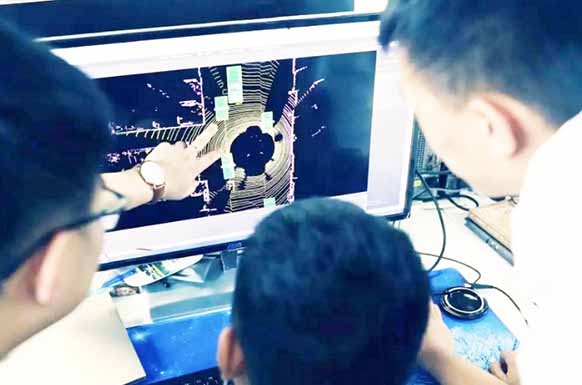
Granted, we may have a bias, but as you’ll see, language service providers have honed into a set of resources and processes ideally suited for data labeling.
1. Professional language knowledge
Obviously, LSPs have specialized linguistic knowledge. It allows them to handle textual labeling with high accuracy across various languages. It sets them apart from traditional data labeling companies that may have data expertise but lack it in other areas.
LSPs are equipped to manage data in many languages, including less common ones. Smaller LSPs handle several languages, while larger ones can work with several dozens. For example, our company often works with 80 languages.
2. High-Quality labeling outcomes
LSPs adhere to strict quality control standards, often backed by ISO certifications like ISO 9001. They follow precise labeling standards and guidelines, ensuring accurate and consistent results. Their broad range of services and expertise across many fields allows them to access a vast pool of subject matter experts, making them ideal for labeling diverse data sets. In our case, we have access to 2,000+ talented individuals from various backgrounds.
3. Rapid response and flexibility
LSPs are famous for their excellent project management and ability to optimize their use of resources. It means they can quickly meet the needs of their clients and adapt to different types of work.
In fact, translation projects tend to have a lot of variety. They can be simple or complex, small or large. As such, big LSPs are ready to easily manage small tasks and big projects. Their workflows are built to deal with volumes of all sizes, ensuring they can always provide the help their clients need.
4. Data confidentiality and security
Non-disclosure agreements are a standard practice in the industry. Most LSPs are very careful with their own data and their clients’ data. They follow strict rules to make sure everything stays confidential. For example, we strictly follow the ISO 27001 Information Security Standard.
5. Comprehensive services
Furthermore, unlike traditional data labeling companies, LSPs provide flexible and comprehensive services. They can help with all the modalities discussed: text, images, audio, and video. They handle various tasks and modalities (transcription, video production, copywriting, translation, annotations, etc.).
An extra advantage of their suite of services is the corpus of data they maintain. By working with such a diverse pool of clients in so many tasks, most sizeable LSPs maintain a usable and valuable corpus of labeled data.
With the swift evolution of AI technology, data labeling has become a pivotal factor in developing high-quality and accurate AI models. Its importance is magnified by the growing demand for AI applications across diverse sectors, leading to an ever-increasing need for precise and reliable data labeling.
As data labeling branches into various areas like image, text, speech recognition, NLP, and machine translation, the importance of choosing the right data labeling partner becomes paramount. The future of AI heavily relies on the quality of data labeling, making it crucial for companies to invest time and effort in selecting a data labeling provider that aligns with their specific needs and quality standards.
The rapid growth and application of AI are set to further amplify the demand for skilled data labeling, opening up numerous opportunities in the industry. This expansion not only promises more job opportunities but also drives continuous progress and innovation in AI technology.
In this dynamic landscape, taking the time to thoroughly research and select the right data labeling company is vital. It’s a decision that can significantly impact the effectiveness and accuracy of your AI models. If you’re unsure about where to start or what to look for, don’t hesitate to reach out. We’re here to guide you through this critical process, ensuring that you make a well-informed decision that will benefit your AI initiatives in the long run.
FAQ
What tools do data labeling companies use?