Do You Need a LATAM Translation for Your Game?

2023-12-31

LATAM Translation

Table of Contents

Latin America represents a rapidly expanding global market, especially in video games. Quickly capturing market shares here can be a great source of revenue for you. But to do so, you must overcome the first barrier—the language.

The Latin American region is complex and has many different dialects and languages. By understanding its linguistic nuances, you can leverage LATAM translation services effectively. Our goal in this article is to help you understand the region and some insights about the language and market. We will cover the four following topics:

  • An overview of Latin America, including its constituent countries.
  • The economic significance of its gaming sector.
  • A breakdown of the predominant languages across the region.
  • Practical LATAM translation considerations.
  • The potential value of these markets and why it’s worth tackling all the above.

Latin America: What is it and where is it?
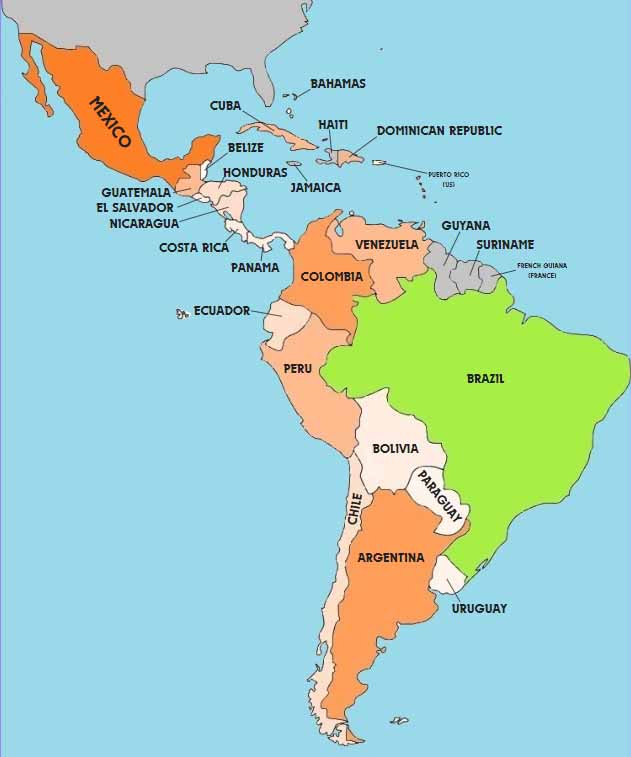
“LATAM” is the abbreviation for Latin America. According to the Encyclopedia Brittanica, the region includes all countries and territories south of the U.S. where Romance languages are predominantly spoken. The region is home to 621 million people! It’s a massive region with a rich linguistic and cultural background. For a visual representation, refer to our map of countries of Latin America below.
Map of countries of Latin America - Mexico, El Salvador, Nicaragua, Costa Rica, Panama, Cuba, Honduras, Belize, Haiti, Jamaica, Bahamas, Dominican Republic, Puerto Rico, Colombia, Ecuador, Peru, Venezuela, Suriname, Guyana, French Guyana, Peru, Bolivia, Chile, Brazil, Paraguay, Uruguay, Argentina
Map of countries of Latin America
As you can see, Latin America should not be confused with South America. The former is a categorization based on language and culture. The latter is a geographic categorization limited to the southern continent of the Americas—South America.

The LATAM gaming market

According to Newzoo, the LATAM gaming market has surged in value. In 2016, it was estimated to be worth $9.1 billion in revenue, and by 2021, it doubled its revenue, reaching $18.4 billion. They expect this positive trajectory to continue in 2024, reaching $23.2 billion in revenue.

The gaming audience grew from 252 million to 334 million in the same period. An extra 57 million gamers will join the market in 2024, pushing the total pool of gamers in the region to 391 million. In fact, as of 2024, the LATAM gaming market has overtaken the EU in number of gamers. However, both markets remain far behind the colossal Asia-Pacific (APAC) region.
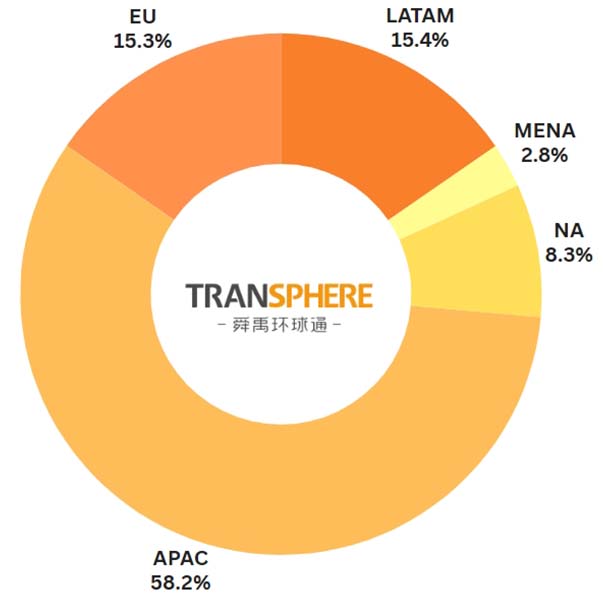
Latam gaming market size in terms of gamers
The proportion of gamers in the world. LATAM gamers are in 2nd place.

But the region’s value doesn’t stop at its potential consumer base. Latin countries are more linguistically consolidated than Europe, with its 25+ languages. In fact, with two LATAM translations, you can reach millions of gamers. That’s an incredible ROI.

It’s like the MENA region, where most countries can be reached by a single language (Arabic). Or the Chinese market that can be captured just with simplified Chinese.

How many LATAM translations do you need?

There are two dominant languages in this region: Spanish and Portuguese. Of the two, Spanish is the most spoken language in the region. It single-handedly accounts for roughly 398 million native speakers. Spanish is used in 19 different countries across Latin America. You can see each Spanish-speaking country or territory in orange on the map below. As a side note, the U.S. is the home of 42 million native Spanish speakers. That’s almost the population of Colombia or Argentina. We chose to gray it out on the map since it is not a LATAM country. But it’s valuable to know that you can also reach a big community of people from the United States. The remaining grayed-out regions are LATAM countries but do not speak Spanish or Portuguese.
Map of countries of Latin America - Mexico, El Salvador, Nicaragua, Costa Rica, Panama, Cuba, Honduras, Belize, Haiti, Jamaica, Bahamas, Dominican Republic, Puerto Rico, Colombia, Ecuador, Peru, Venezuela, Suriname, Guyana, French Guyana, Peru, Bolivia, Chile, Brazil, Paraguay, Uruguay, Argentina
Portuguese, highlighted in green on the map, dominates in Brazil, where 203 million native speakers live. That being said, some smaller Portuguese-speaking communities exist in Venezuela and Paraguay. These communities account for 250,000 native speakers. 

Of course, there are Latin American countries that don’t speak Spanish or Portuguese. In fact, Haiti’s language is French or Haitian Creole. French and Creole aside, the region has a rich linguistic background and is home to more than 448 languages. These local languages will influence the dominant ones, creating exciting mixtures.
 

LATAM translation: 3 important considerations

Before starting your LATAM translations, we have to clarify 3 essential localization elements:
  • The complexities of LATAM Spanish and how it differs from EU or Castilian Spanish.
  • The culture of the region and specifically their religiosity relative to the EU.
  • The basic principles of UI localization as they pertain to Spanish.

The language: LATAM Spanish and its 5 variants

Unlike Portuguese, primarily spoken in Brazil, Spanish found a home in more than 19 countries. From the north of Mexico down to the southern tip of Argentina, the language evolves and adapts, giving rise to unique linguistic flavors. There are 5 popular variants, which are the following:
  1. Mexican Spanish: Spoken in Mexico and its bordering regions.
  2. Rioplatense Spanish: Named after the Rio de la Plata basin, this variant is common in Argentina and Uruguay.
  3. Andean Spanish: This variant is common in Peru, Ecuador, and Colombia. It incorporates influences from indigenous languages, lending it a unique character.
  4. Chilean Spanish: This variant is exclusive to Chile. Its fast pace and distinctive slang characterize it.
  5. Caribbean Spanish: As you can tell by the name, it’s the variant of Cuba, Puerto Rico, and the Dominican Republic. It has a rhythmic speech and a tendency to drop certain consonant sounds, like Andalusian Spanish (from Spain).
Of course, each variant remains part of the Spanish language. Natives can understand the written variants fairly quickly despite their minor differences. These differences are exacerbated in their spoken form, which includes distinct pronunciations, speeds, and local expressions.

European Spanish vs. LATAM Spanish

As you can imagine, the Spanish language originated in Europe, specifically Spain. Like English, which started in England, it spread across the world due to its colonial history. And like English, the further away you go from the European source, the more differences you can find in the language. We will highlight these differences by comparing EU Spanish to some LATAM variants, especially Mexican Spanish.
Vocabulary variations:
  • Example: The word for “Pen”
    • English source: “Do you have a pen?”
    • European Spanish translation: “¿Tienes un bolígrafo?”
    • LATAM Spanish translation: “¿Tienes una pluma?”
In Latin America, “pen” is translated as “pluma.” Interestingly, in the EU, it means “feather” instead.
  • Example: The word for “Jacket”
    • English source: “I bought a jacket.”
    • European Spanish: “He comprado una chaqueta.”
    • Mexican Spanish: “He comprado una chamarra.”
While “jacket” translates to “chaqueta” in European Spanish, it’s “chamarra” in Mexican Spanish. Intriguingly, the English word “jacket” and the Spanish one “chaqueta” both come from the French “jacquette.” It illustrates their shared European roots and how these local languages often influenced each other. But in Mexico, “chaqueta” has an altogether negative connotation and is often associated with onanism. You can see how a mistranslation here could be embarrassing.
Pronouns and pronunciation in Rioplatense Spanish:
  • English source: “You speak very clearly.”
  • European Spanish: “Tú hablas muy claro.”
  • Rioplatense Variant: “Vos hablás muy claro.”
We can pay attention to two changes here:
  • The pronoun “you” translates into “vos” instead of “tú.” This style is distinctive in the southernmost part of Latin America and likely comes from the abbreviation of “vosotros.”
  • A “tilde” (accent mark) is added over the vowel in “hablás.” Unlike Chinese tones, which alter the meaning of words, Spanish accent marks indicate which syllable to stress. In this case, the accent mark doesn’t change the word’s meaning but affects its pronunciation and syllable stress.
But let’s move away from common cases and discuss one likely to happen in many games.

Dead in Vinland – A practical case
Dead in Vinland is a great survival game developed by Ishtar Games. In it, you play as an extravagant group of Vikings facing constant trials and tribulations. The game opens with a shipwreck landing you and your family on an isolated island.

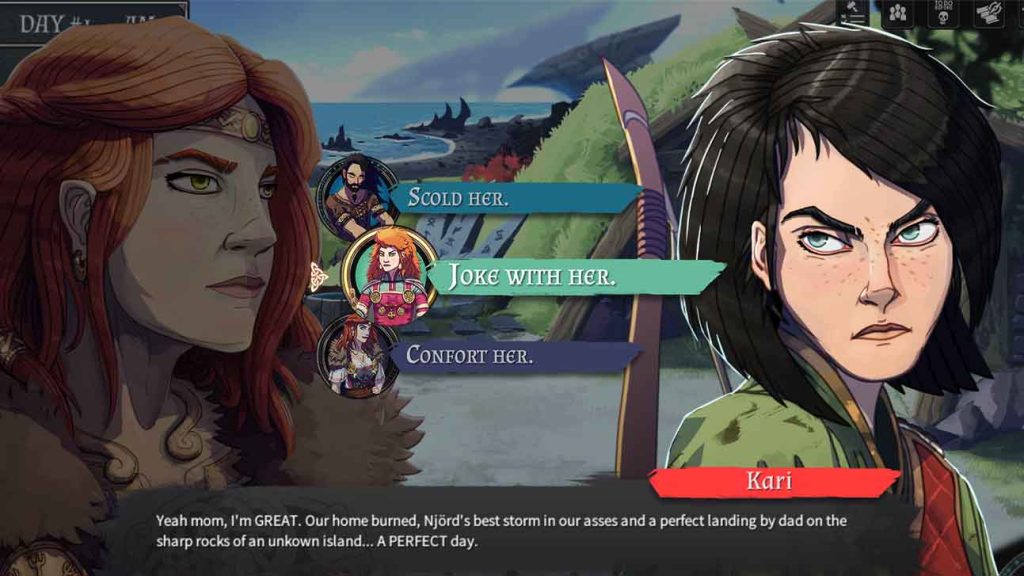
In the screenshot below, you can see an unfolding dialogue between Kari and her mother. Keep in mind the stakes for the characters. Their home was torched, their future uncertain, and their present marked by the precariousness of their new, unforgiving environment.
Dead In Vinland, a dialogue scene between Kari and her mum about their latest ordeals. Kari is saying: "Yeah mom, I'm GREAT. Our home burned, Njord's best storm in our asses and a perfect landing by dad on the sharp rocks of an unknown island... A PERFECT day."'
This conversation, tinged with sarcasm and resilience, is informal—a natural reflection of their bond and struggle. The translation must capture the emotional turbulence of their experience to maintain the game’s narrative integrity.

Now, let’s take a closer look at the dialogue:

Original dialogue: “Yeah mom, I’m GREAT. Our home burned, Njord’s best storm in our asses and a perfect landing by dad on the sharp rocks of an unknown island… A PERFECT day.”

The translation of “by dad” is particularly interesting, so let’s focus on that:
  • European Spanish: “…y un aterrizaje perfecto de papá en las afiladas rocas de una isla desconocida… Un día PERFECTO.”
  • Mexican Spanish: “…y un aterrizaje perfecto del viejo en las rocas afiladas de una isla desconocida… Un día PERFECTO.”

The term “viejo” means “old,” like an old man or an old object. But in Mexican Spanish, “el viejo” can be used to refer to a dad. It’s a subtle distinction, but this informal approach befits the game’s style and intent.

LATAM cultural considerations

Latin America’s cultural landscape is far too rich and diverse to cover extensively in this article. As such, we will focus on one critical aspect—the region’s religious orientation.
We decided to focus on the local religion because of its potential effect on your game content. For example, in the MENA region, games often have to remove or change depictions of alcohol. They do so to avoid local censors and adhere to the local cultural preferences.
It’s important to understand these potential pitfalls ahead of time. Otherwise, you risk changing large chunks of your content, which is time-consuming and costly.

What is the major religion of Latin America?
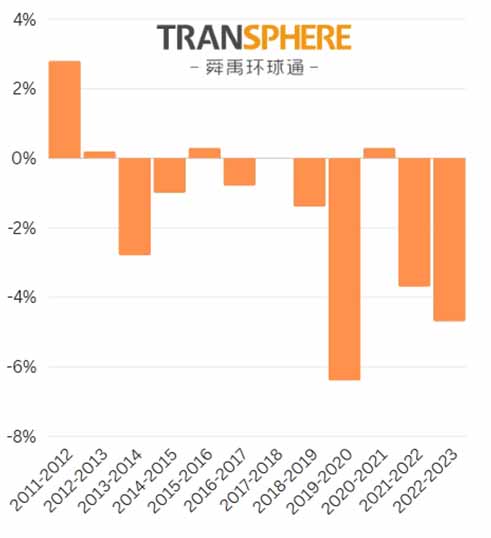
Christianity, especially Catholicism, is the predominant faith across the region. This religious inclination aligns Latin America with both the United States and Spain to some extent. But this is where the similarities end. Europe, including Spain, has steadily declined religious adherence over the past twenty years. In fact, according to a 2023 survey by Spain’s “Centro de Investigaciones Sociologicas,” only 52.9% of Spaniards identify as Catholics. But, 39.8% are agnostic or atheist.
Yearly decrease of Christian identification in Spain
Yearly decreases of Christian identification in Spain
In stark contrast to Europe, Latin America boasts some of the highest rates of Christianity globally. An overwhelming majority (90%) of the population in this region identify as Christians. The highest rates of Christianity were found in these countries:
  • Paraguay (96%)
  • Peru (93%)
  • Colombia (92%)
  • Guatemala (91%)
  • Mexico (90%)
  • Venezuela (90%)
  • Argentina (90%)
  • Brazil (87%)
In contrast, Uruguay was the least Christian nation. “Only” 57% of its population identified as Christians.

Biblical literalism

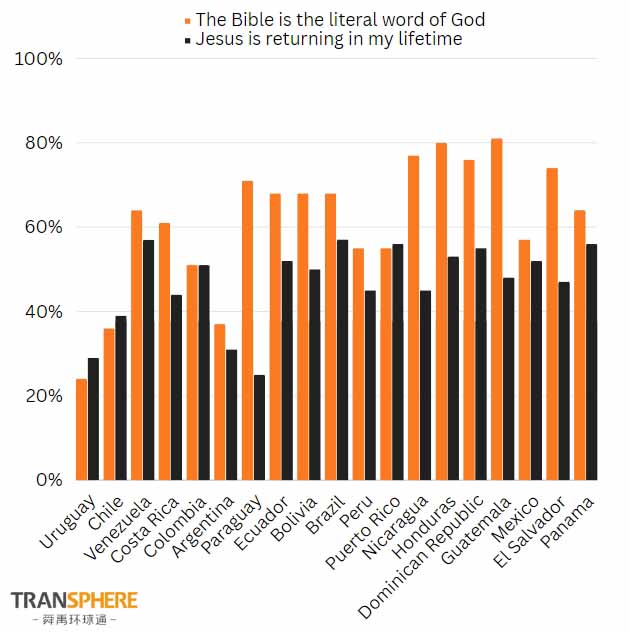
Aside from how they identify, many Latin Americans interpret the Bible seriously. A Pew Research study revealed that a considerable portion of Latin Americans regard the Bible as the literal word of God. And half of the respondents expected the return of Jesus within their lifetimes.
Extrapolating this study into the broader population could represent a population of 341 million literalists. And 285 million people are expecting the Second Coming in this era.

Rates of literalism in LATAM and rates of individuals that believe in the Second Coming in their lifetimes.
Rates of biblical literalism and belief in the Second Coming of Jesus Christ in this era in Latin America.

Why do these insights matter?

Because, presumably, these individuals take their faith very seriously. As such, if your game delves into Christian tropes, you may have to scrutinize it. Content that might be well-received in European markets could be contentious in Latin America. On the other hand, devout characters may have more mass appeal in the region. Plotlines that showcase Christianity positively could resonate more. Delving into these nuances can help you understand how to build your future game content and modify your current one.

UI localization: Navigating space and language
A frequent hurdle in game localization is adapting the user interface (UI) to different languages, which inherently vary in word and sentence length. The disparity between Chinese and English is often noted, with English translations tending to expand text length by about 50%. Bengali script, on the other hand, can increase text size by up to 80% compared to Chinese.
When it comes to Spanish, which is widely spoken in LATAM, the text length is typically 9-10% longer than English. This might seem inconsequential, but in practice, these variations have profound implications. Historically, the gaming industry struggled with UI designs that did not accommodate for longer translations, leading to cramped and cut-off text.
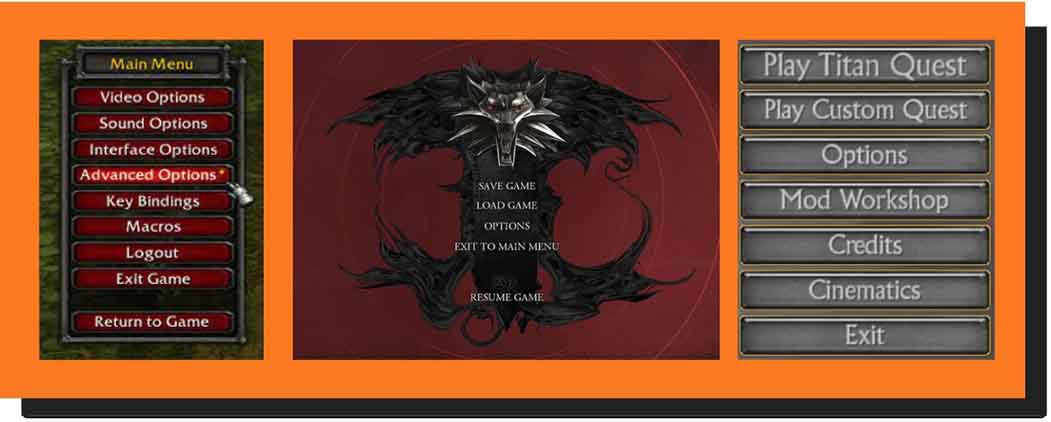
World of Warcraft menu the Witcher 1 menu and Titans Quest menu
From left to right, the World of Warcraft menu, the Witcher menu and the Titan's Quest menu.

However, with the maturation of the industry and a deeper appreciation for the importance of localization, UI designs have evolved.

They are now more flexible, accommodating larger screen sizes and the need for clear, readable text in various languages. Yet, it’s not uncommon for contemporary games to occasionally revert to the restrictive designs of the past.

A Modern Example
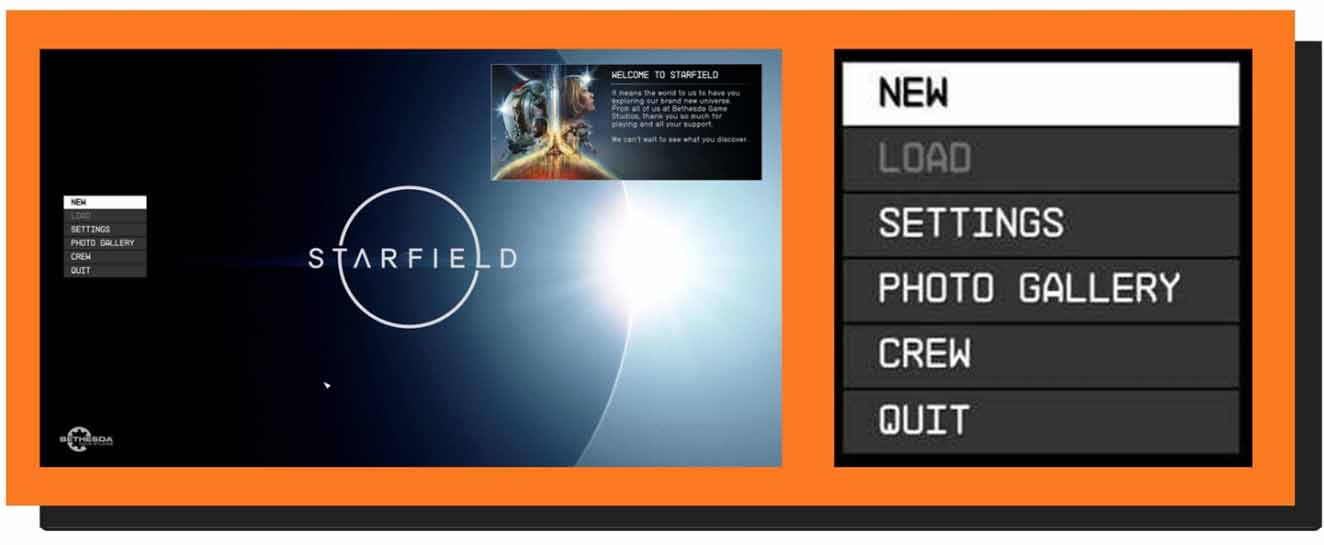
A prime example of UI localization challenges can be seen in recent game releases such as Bethesda’s ‘Starfield’. Set against the backdrop of an expansive space environment, the game’s menu—particularly the ‘Photo Gallery’ option—highlights the space considerations necessary for different languages.
Starfield's menu and how it may not be wide enough if translated to lengthier language scripts
Starfield's menu.
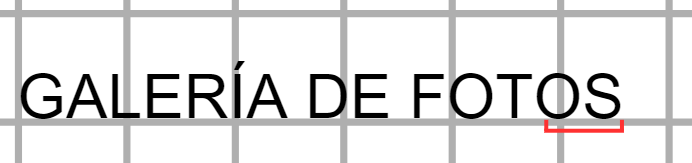
To assess the UI problem, we will use a fairly simple method. We will create a grid to highlight the differences in size. In the original English, “Photo Gallery” spans nearly 6 squares on our grid. When translated into Spanish as “Galería de Fotos,” the text occupies about 6.5 squares. Although this seems like a marginal increase, it is significant in UI design, where space is at a premium.
English term: Photo Gallery
English.
Galeria de fotos, in Spanish
Spanish.

Consider the image below.

The image shows ‘Photo Gallery’ within the confines of the menu button. Yet, the translation into Spanish, ‘Galería de Fotos’, would surpass the space provided by the button design, as indicated by the red boundary lines.

This overflow presents a dual challenge: it disrupts the visual harmony and alignment of the menu, and in the worst-case scenario, the text may extend beyond the button itself, necessitating a UI redesign.
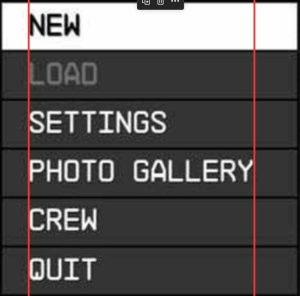
Starfield's menu and how the spanish translation, "galeria de fotos" could overflow, are at least break the symetry of the image.

Is it worth investing in LATAM localization?

In the ideal world, each game should be translated and dubbed into each local linguistic variant. However, this approach is financially prohibitive. After all, as a company, you have to carefully examine every investment you make. As such, localizing a game becomes a strategic decision, and weighing the costs against potential returns is essential.

Maximizing ROI

When prioritizing languages for localization, the key is identifying those offering the most substantial ROI, which brings us to two significant choices: Mexican Spanish and Brazilian Portuguese.

These languages stand out for their potential to maximize returns on investment. European Spanish could be a valuable addition, although it falls outside the primary focus of this discussion.

Why choose these languages?

Our recommendation hinges on two crucial factors:

  1. Size: The success of a game significantly depends on reaching a substantial market segment. It’s the key reason companies prioritize larger markets, such as China, over smaller ones, like the Netherlands. A bigger audience can translate to higher sales and broader game adoption.
  2. Purchasing power: But size alone doesn’t lead to success. The cost of gaming, which includes purchasing equipment like PCs, consoles, or mobile devices, maintaining an internet connection, and buying the game itself, makes the financial capacity of gamers crucial. Hence, markets with higher purchasing power, like the United States, are often more profitable than those with lower economic strength, such as India.

Brazil
Brazil, home to 217 million people, is experiencing steady population growth. After grappling with economic challenges over the past decade, Brazil is now a member of the influential BRICS, alongside other rapidly developing economies.
BRICS

The post-COVID era has seen Brazil’s GDP rebound impressively, nearing the $2.126 trillion mark, with a GDP per capita of $8,831. While these figures provide a general sense of economic recovery, they don’t fully capture the nuances necessary for understanding the gaming market’s potential in Brazil.

Delving deeper, a 2018 local study revealed the average Brazilian household has a disposable income of around $333. This figure climbs to $1,272 for the top 10% of the wealthiest households, while the least affluent manage with $108. Given the recent economic upswing, it’s plausible these figures have risen as of Q4 of 2023.
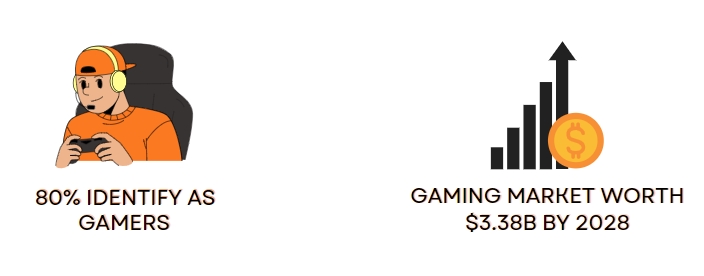
Brazil is the home of a thriving gaming community and a growing gaming market at 9% per year and is expected to reach 3.38 billion USD.


The gaming sector in Brazil presents a unique landscape. Despite lower overall penetration of video games compared to other markets, a remarkable 80% of Brazilians identify as gaming enthusiasts—either actively playing or engaging with gaming content. This high level of interest, coupled with a sizeable market and increasing disposable incomes, suggests a fertile ground for the gaming industry.

Brazil’s gaming industry is not just theoretical potential; it’s a burgeoning reality. The market is expanding rapidly, with an impressive annual growth rate of about 9%. By 2028, it’s projected to hit $3.38 billion. This growth trajectory indicates not only the existing appetite for gaming but also its future potential.

Moreover, Brazil’s young demographic, with a significant portion of the population under 30, is a key driver for the gaming industry’s growth. This demographic is typically more tech-savvy and open to adopting new gaming trends, making them a crucial target audience for game developers and marketers.

Mexico

Economically, Mexico mirrors Brazil in some respects: a period of stagnation reminiscent of the 2010s has given way to a resurgence, with its GDP climbing to $1.4 trillion. The per capita GDP of $11,028 slightly edges out Brazil’s, hinting at a marginally more affluent consumer base.

As of 2023, Mexican households report an average disposable income of approximately $682. Recent foreign investments from global giants like the United States and China signal a positive trend, suggesting a potential increase in these income levels.

The gaming landscape in Mexico is particularly robust, with an overwhelming 78.4% of the population engaged in gaming. This equates to a staggering 100 million gamers, the highest gaming market penetration in all of Latin America.
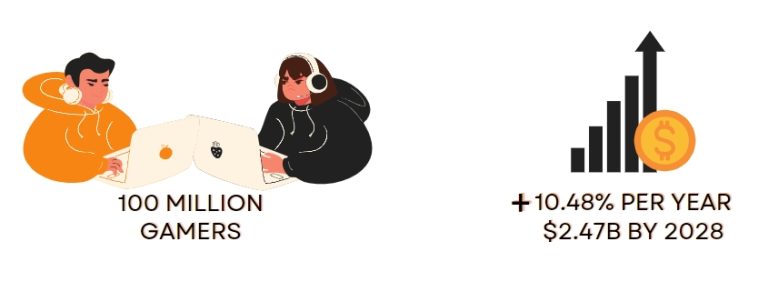
The Mexican gaming market includes roughly 100 million Mexican gamers and as a result, it generated $1.48 billion in revenue in 2023. This is a small piece of evidence that the value of a Mexican Spanish translation is increasing.

In 2023 alone, this fervent gaming community contributed $1.48 billion in revenue, excluding hardware sales and other gaming-related expenditures. The market’s growth trajectory surpasses even Brazil’s, with a forecasted annual increase of 10.42%, potentially reaching $2.47 billion by 2028.

Localizing games into Mexican Spanish offers a strategic advantage. While there are nuances between Mexican Spanish and other dialects, these differences are minor, often under 5%.

This linguistic similarity means that localizing a game for the Mexican market not only captivates this specific audience but also holds strong appeal across other Spanish-speaking countries in Latin America.
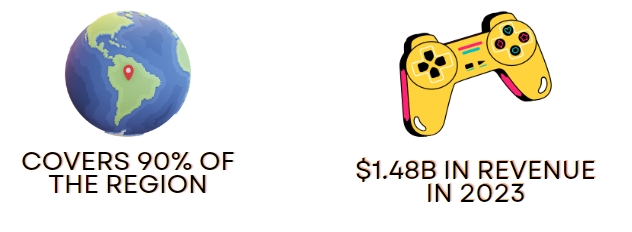
Mexican Spanish can act as a gateway to the LATAM markets.

The minimal linguistic variation makes Mexican Spanish an efficient and effective choice for reaching a broad swath of the Latin American gaming market.

Discussion

Propel Your Brand into

the Global Stage

At Transphere, we believe that the true measure of our success is the growth of our long-term partners. Reach out to our passionate members and start growing today!

Fill out the form to learn how we can help you grow.

Contact-us